
In the modern world, where material possessions and financial success are often seen as indicators of happiness and fulfillment, it is intriguing to explore how spirituality perceives wealth and materialism. Some may assume that spirituality and material wealth are diametrically opposed, but delving deeper reveals a more nuanced perspective. By examining the relationship between spirituality, wealth, and materialism, we can gain insights into the various beliefs and practices that shape our understanding of abundance and its place in our lives. Understanding this viewpoint can potentially enrich our own spiritual journey, fostering a balance between material prosperity and inner fulfillment.

This image is property of images.unsplash.com.
1. Traditional Views on Wealth and Materialism
1.1 Historical Perspective
Throughout history, views on wealth and materialism have varied across different cultures and societies. In some ancient civilizations, such as Egypt and Mesopotamia, material wealth was closely tied to power and social status, with the ruling elites amassing great riches while the majority of the population lived in poverty. Similarly, in feudal societies, wealth was concentrated in the hands of a few noble families, while the common people struggled to make ends meet.
1.2 Religious Teachings
Religious teachings have played a significant role in shaping traditional views on wealth and materialism. In many religious texts, including the Bible, the Quran, and the teachings of Buddha, there is a cautionary tone against excessive attachment to material possessions. These scriptures emphasize the ephemeral nature of material wealth and highlight the importance of non-material values such as compassion, inner peace, and spiritual fulfillment.
1.3 Perception of Material Possessions
The perception of material possessions varies among individuals and societies. Some view wealth as a symbol of success and a means to a comfortable and secure life, while others see it as a source of greed and corruption. Material possessions can provide a sense of security and comfort, but they can also create a never-ending cycle of desire and dissatisfaction. It is important to examine our relationship with material goods and question whether they are truly necessary for our happiness and well-being.
2. Spiritual Perspectives on Wealth
2.1 Understanding Abundance
Spirituality views abundance not solely in terms of material wealth, but as a state of mind and being. It recognizes that true abundance comes from within, from cultivating gratitude, contentment, and a deep connection to the universe. Spiritual teachings invite us to shift our focus from external possessions to internal richness, realizing that we possess an infinite wellspring of love, joy, and wisdom that can never be taken away.
2.2 Detachment from Material Belongings
Detachment from material belongings is a fundamental principle in many spiritual teachings. It doesn’t mean renouncing all possessions but rather cultivating a mindset of non-attachment. By recognizing that material possessions are impermanent and transient, we free ourselves from the grip of greed, envy, and possessiveness. Detachment allows us to appreciate the beauty and utility of material objects without becoming enslaved by them.
2.3 Importance of Inner Wealth
Spirituality places great importance on inner wealth, which encompasses qualities such as compassion, kindness, generosity, and gratitude. These inner qualities enrich our lives and the lives of those around us, fostering deeper connections and a sense of purpose. Inner wealth is not dependent on external circumstances but is cultivated through spiritual practices such as meditation, self-reflection, and selfless service.
3. The Concept of Prosperity and Spirituality
3.1 Prosperity as a Spiritual Goal
In the spiritual realm, prosperity is not solely measured by financial wealth but is viewed as a holistic concept encompassing physical, emotional, mental, and spiritual well-being. True prosperity is the result of aligning our actions with our inherent values, living authentically, and pursuing a sense of purpose. It is about finding a harmonious balance in all aspects of life and experiencing a profound sense of fulfillment and joy.
3.2 Balancing Financial Success and Spiritual Development
While spiritual teachings emphasize the importance of non-attachment to material wealth, they do not advocate for poverty or financial deprivation. Instead, they encourage individuals to pursue financial success in alignment with their spiritual values, ethically and responsibly. Balancing financial success with spiritual development involves using wealth as a tool for personal growth and positive impact, while avoiding becoming consumed by material pursuits.
3.3 Authenticity and Spirituality in Pursuit of Wealth
Authenticity is a key aspect of integrating wealth and spirituality. It involves aligning our financial endeavors with our deepest values, ensuring that our pursuit of wealth is rooted in integrity, honesty, and ethical conduct. Spirituality reminds us that true wealth lies not only in acquiring material possessions but also in our ability to be true to ourselves, to live in alignment with our values, and to make a meaningful contribution to the world.
4. Materialism and Its Effects on Spirituality
4.1 Impact of Materialistic Attitudes on Spiritual Well-being
Materialistic attitudes, characterized by an excessive focus on acquiring and accumulating material possessions, can have detrimental effects on spiritual well-being. The relentless pursuit of material wealth often leads to a sense of emptiness and dissatisfaction, as the craving for more and better possessions becomes insatiable. This preoccupation with materialism can distract individuals from their spiritual path and hinder their ability to find true fulfillment.
4.2 Conflict between Material Success and Spiritual Growth
At times, there can be a conflict between material success and spiritual growth. The pursuit of material wealth may consume our time, energy, and attention, leaving little room for spiritual practices such as meditation, prayer, or self-reflection. This imbalance can result in a loss of connection to our inner selves, diminishing our capacity for compassion, empathy, and self-awareness.
4.3 The Illusion of Material Happiness
Materialism often perpetuates the illusion that acquiring more possessions will bring lasting happiness. However, numerous studies have shown that material possessions provide only temporary satisfaction and do not contribute significantly to long-term well-being. Spirituality reminds us that true and lasting happiness comes from cultivating qualities such as love, gratitude, and contentment, which cannot be obtained through materialism alone.

This image is property of images.unsplash.com.
5. Attitudes towards Philanthropy and Giving
5.1 Generosity as a Spiritual Practice
Generosity and giving are integral to many spiritual traditions. They are seen as important acts of compassion and service, allowing individuals to transcend their self-centered desires and connect with the needs and well-being of others. By practicing generosity, individuals not only benefit others but also experience a deep sense of joy and fulfillment that comes from contributing to the greater good.
5.2 Importance of Sharing and Giving Back
Spirituality emphasizes the importance of sharing our wealth and resources with those in need. It recognizes that hoarding wealth and possessions can create a sense of isolation and separation, while sharing promotes unity and interconnectedness. Sharing is seen as a way to alleviate suffering, promote social justice, and create a more equitable and compassionate society.
5.3 Wealth Redistribution in Spiritual Communities
In some spiritual communities, there is an emphasis on collective ownership and wealth redistribution. This approach challenges the notion of individual ownership and encourages the pooling of resources for the benefit of all members. By redistributing wealth, these communities seek to create a more egalitarian and harmonious society, where everyone’s needs are met, and material possessions are shared equitably.
6. Exploring Alternatives to Materialistic Pursuits
6.1 Simplicity and Minimalism
Simplicity and minimalism are alternative approaches to materialistic pursuits. They involve intentionally simplifying one’s life, decluttering possessions, and reducing reliance on material goods. These practices allow individuals to shift their focus from external accumulation to internal growth, finding contentment and fulfillment in experiences and relationships rather than material possessions.
6.2 Focus on Experiential Richness
Rather than seeking fulfillment through material wealth, spirituality directs attention to experiential richness. It encourages individuals to invest in experiences that nourish the soul, such as spending time in nature, engaging in creative pursuits, building meaningful relationships, and pursuing personal growth. Experiences provide a sense of joy, connection, and personal transformation that material possessions cannot replicate.
6.3 Prioritizing Relationships over Materialism
Spirituality reminds us of the importance of prioritizing relationships over materialism. It encourages the cultivation of loving and meaningful connections with others, emphasizing the importance of empathy, compassion, and emotional support. By valuing relationships over material possessions, we build a sense of belonging and fulfillment that brings more sustained happiness and well-being.

This image is property of images.unsplash.com.
7. Wealth as a Tool for Spiritual Growth
7.1 The Role of Wealth in Personal Development
Wealth can serve as a tool for personal development and spiritual growth when approached with consciousness and intentionality. It provides opportunities for self-exploration, learning, and self-transformation. Wealth can be used to invest in self-care practices, education, personal development programs, and spiritual retreats, opening doors to deeper self-awareness and personal evolution.
7.2 Leveraging Wealth for Positive Impact
Spirituality encourages individuals to leverage their wealth for positive impact in the world. Wealth can be used to support charitable causes, fund social and environmental initiatives, and promote the well-being of others. By aligning financial resources with values of compassion, sustainability, and social justice, individuals can make a tangible difference and contribute to creating a more equitable and harmonious global community.
7.3 Cultivating a Spiritually Aligned Relationship with Wealth
Cultivating a spiritually aligned relationship with wealth involves maintaining a sense of gratitude, humility, and responsibility in one’s financial endeavors. It requires conscious decision-making, ethical conduct, and a commitment to using wealth as a tool for personal and collective growth. By aligning financial choices with spiritual values, individuals can navigate the path of wealth with integrity and contribute to the betterment of society.
8. Overcoming the Pitfalls of Wealth and Materialism
8.1 Mindfulness and Gratitude
Mindfulness and gratitude are powerful antidotes to the pitfalls of wealth and materialism. Practicing mindfulness allows individuals to develop awareness of their thoughts, desires, and attachments related to wealth, enabling them to make conscious choices. Gratitude nurtures a sense of contentment and appreciation for what one already has, reducing the constant need for more possessions and fostering a deeper sense of fulfillment.
8.2 Selflessness and Service
Selflessness and service are essential in overcoming the negative effects of wealth and materialism. By shifting the focus from self-centered desires to serving the needs of others, individuals can transcend the ego’s preoccupation with material possessions. Engaging in acts of service and selflessness brings a sense of purpose, connection, and fulfillment that surpasses the temporary satisfaction derived from material wealth.
8.3 Techniques for Balancing Spirituality with Material Life
Balancing spirituality with the demands of material life requires conscious effort and practice. Techniques such as meditation, self-reflection, and setting clear intentions can help individuals navigate the complexities of wealth and materialism while staying aligned with their spiritual values. Creating daily rituals and practices that prioritize spiritual well-being over material desires is essential in maintaining a harmonious and fulfilling life.
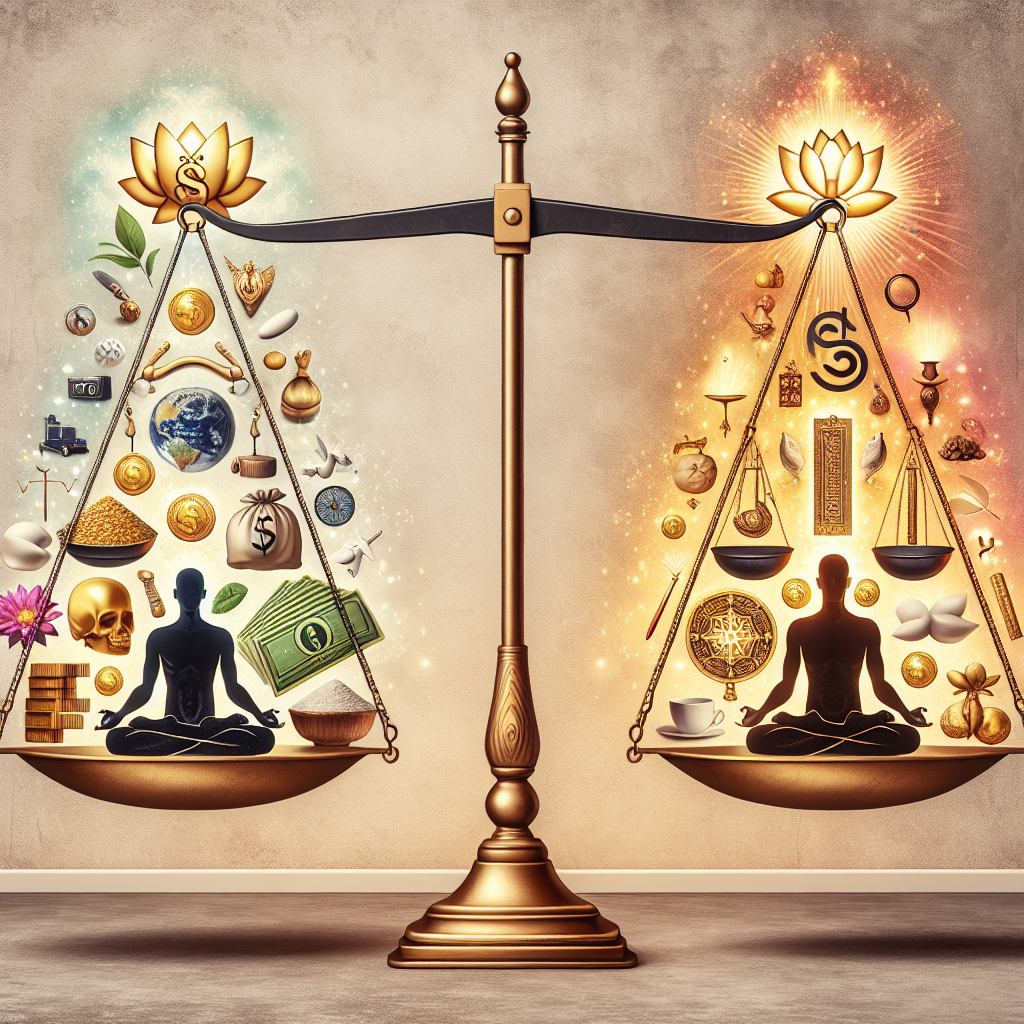
9. Wealth and Materialism in Different Spiritual Traditions
9.1 Buddhism
In Buddhism, wealth and material possessions are seen as impermanent and transient. Buddhist teachings emphasize the importance of non-attachment to material possessions and encourage a simple and minimalist lifestyle. The focus is on cultivating inner wealth through meditation, mindfulness, and ethical living, rather than on the accumulation of material wealth.
9.2 Hinduism
Hinduism recognizes that material wealth is a legitimate aspect of human life but cautions against excessive attachment and greed. Wealth is seen as a means to fulfill one’s responsibilities and contribute to the well-being of society. Hindu teachings emphasize the concept of “karma yoga,” or selfless action, encouraging individuals to perform their duties and use their wealth for the benefit of others.
9.3 Christianity
Christianity teaches that wealth and material possessions are gifts from God and should be used responsibly and with gratitude. The teachings of Jesus emphasize the importance of sharing and giving to those in need, promoting a sense of stewardship rather than ownership. The accumulation of wealth is not condemned, but Christians are encouraged to prioritize their relationship with God and the well-being of others over material wealth.
9.4 Islam
In Islam, wealth is seen as a trust from God and is to be used responsibly and in accordance with Islamic principles. Islamic teachings emphasize the importance of fairness, justice, and generosity. Muslims are encouraged to give a portion of their wealth as charity (zakat) and to engage in acts of service to support the less fortunate. Material wealth is not condemned, but individuals are reminded of its transient nature and the need to prioritize spiritual well-being.
9.5 Indigenous Spiritualities
Indigenous spiritualities often emphasize a deep connection to the natural world and the importance of stewardship. Material possessions are viewed in the context of their impact on the community and the environment. Indigenous cultures prioritize a holistic approach to wealth, recognizing the interconnectedness of all beings and the need for balance and harmony in the distribution of resources.
10. Achieving True Prosperity and Spiritual Fulfillment
10.1 Aligning Wealth with Spiritual Values
True prosperity and spiritual fulfillment come from aligning wealth with our deepest spiritual values. This involves using wealth as a means to make a positive impact, being mindful of the ethical implications of our financial choices, and cultivating gratitude and contentment in all aspects of life. When wealth is aligned with spiritual values, it becomes a tool for personal growth, social justice, and environmental sustainability.
10.2 Integration of Material and Non-Material Aspects
Achieving true prosperity requires integrating material and non-material aspects of life. This entails valuing both material wealth and inner richness, recognizing that they are not mutually exclusive. By nurturing qualities such as love, compassion, and self-awareness while also honoring our material needs, we create a harmonious and fulfilling life that encompasses both worldly success and spiritual growth.
10.3 Quest for Inner Wholeness and Contentment
Ultimately, the quest for true prosperity and spiritual fulfillment is a journey towards inner wholeness and contentment. It is a process of self-discovery, self-transformation, and self-realization. By embracing our innate spiritual nature and cultivating a deep connection to ourselves and the world around us, we can transcend the limitations of materialism and tap into the infinite source of abundance and fulfillment within.