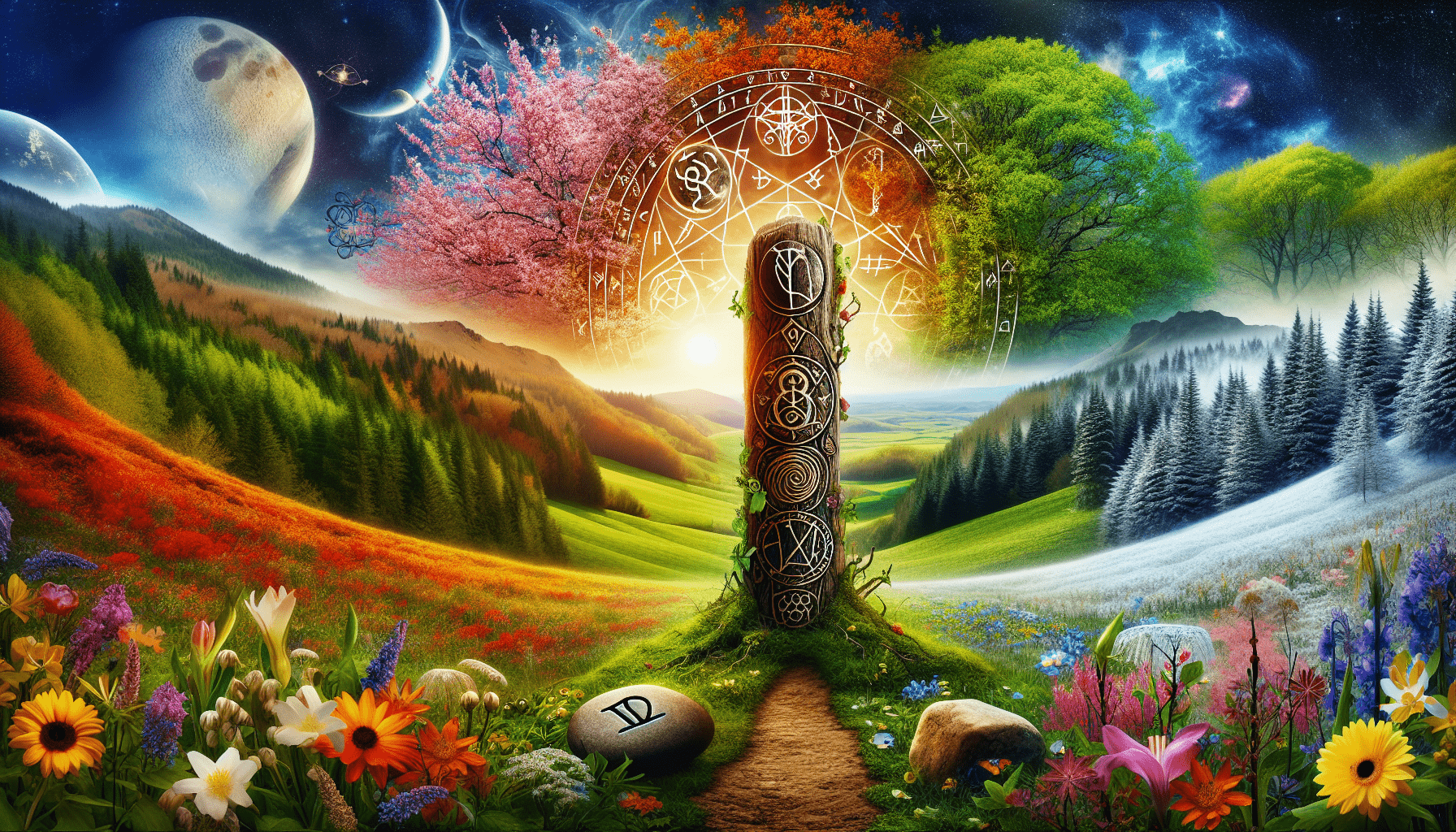
Discover the fascinating realm of divination and its intricate connection with the ever-changing seasons and natural cycles. In this article, we will delve into the intriguing world of interpreting nature’s cycles, exploring how the shifting seasons impact divinatory practices and the interpretations obtained. Embark on a journey of understanding as we unravel the profound influences that the rhythm and flow of nature have on our ancient traditions of divination.
Introduction
Welcome to this comprehensive article on the connection between divination and nature’s cycles. In this article, we will explore the fascinating relationship between divination and the changing seasons, as well as other natural cycles. Divination, a practice deeply rooted in history and culture, has long been influenced by the rhythms of nature. By understanding and interpreting these cycles, we can gain valuable insights into our lives and the world around us. So, let’s delve into the rich tapestry of divination and its connection with nature!
Overview of Divination
Definition of divination
Divination, in its simplest terms, refers to the practice of seeking knowledge or insight from supernatural or higher powers. It involves various methods and techniques to interpret signs, symbols, or omens with the aim of uncovering hidden information about the past, present, or future. This ancient art has been an integral part of human societies across cultures and civilizations for millennia.
History of divination
The history of divination is as ancient as human civilization itself. From the ancient civilizations of Mesopotamia and Egypt, to the indigenous tribes of Africa and the Native Americans, divination has played a vital role in religious, spiritual, and practical aspects of life. Over time, divination practices have evolved and adapted to cultural beliefs, social contexts, and technological advancements.
The role of divination in different cultures
Divination has woven its way into the fabric of numerous cultures, each with its unique practices and interpretations. In African cultures, divination is often deeply rooted in ancestral worship and is used to seek guidance, resolve conflicts, and make important decisions. Native American tribes employ divination as a means of tapping into the wisdom of the earth and their ancestors. Asian cultures, such as China and India, have rich traditions of divination that integrate philosophy, astrology, and spirituality.
Understanding Nature’s Cycles
Importance of seasonal changes
Seasonal changes play a crucial role in the natural world and directly impact all living beings. The shifting patterns of temperature, daylight, and weather conditions shape the growth of plants, migration of animals, and even our own behavior and well-being. Recognizing and celebrating these cyclical changes is not only essential for maintaining a harmonious relationship with nature, but also for gaining insights into our own lives.
Types of nature’s cycles
Nature’s cycles encompass various dimensions, including the seasons, lunar phases, solstices, equinoxes, and planetary movements. Each cycle represents a unique rhythm and has its own significance and influence. By understanding and closely observing these cycles, we can attune ourselves to the ebb and flow of the natural world and harness its wisdom for divinatory purposes.
How nature’s cycles affect human life
Nature’s cycles have a profound impact on human life, both physically and spiritually. The changing seasons affect our physical well-being, moods, and energy levels. The waxing and waning of the moon can influence our emotions and intuition. When we align ourselves with these cycles, we can tap into the natural energies and gain deeper insights into ourselves and the world around us.
Connection between Divination and Nature
Beliefs about nature’s influence on divination
Many divination traditions across cultures hold the belief that nature directly influences the practice of divination. These traditions view nature as a source of wisdom and a reflection of universal forces. The cycles of nature are seen as mirrors of the cycles of human life, and by observing and interpreting these cycles, divinatory practitioners can gain profound insights and guidance.
The use of natural symbols in divination
Nature provides a rich tapestry of symbols that can be used in divination. Natural elements such as animals, plants, minerals, and weather patterns often hold symbolic meanings that can be translated into divinatory messages. For example, a crow may represent a message from the spirit realm, while a blooming flower may symbolize new beginnings. By incorporating these symbols into divination practices, practitioners can tap into the wisdom of nature and enhance their interpretations.
Divination techniques that incorporate nature’s cycles
Various divination techniques have emerged over time that incorporate and reflect the cycles of nature. For example, tarot readings can be influenced by the seasons, with different cards representing the energy and themes of each season. Similarly, astrology, which aligns with the movements of celestial bodies, offers a comprehensive system for understanding and predicting the influences of nature on our lives. Other techniques, such as the casting of runes or the reading of bird omens, also incorporate nature’s cycles to provide insights and guidance.

Interpreting the Seasons
Associations between seasons and divination
Each season carries its own unique energy and symbolism, which can be translated into divinatory messages. For example, spring is often associated with new beginnings, growth, and fertility, while summer represents abundance, vitality, and passion. Autumn signifies harvest, transformation, and introspection, while winter symbolizes rest, reflection, and preparation. By understanding these associations, divinatory practitioners can interpret the messages of the seasons and apply them to various aspects of life.
Meaning and symbolism of different seasons in divination
In divination, each season holds symbolic meanings that can be interpreted in relation to specific questions or situations. For example, if someone seeks guidance on a new project, the energy of spring may suggest that it is a favorable time to initiate and sow the seeds of their endeavor. Similarly, the introspective energy of autumn may indicate the need for reflection and evaluation before making important decisions. By attuning to the seasonal energies, divination practitioners can provide guidance that aligns with the natural rhythm of life.
Seasonal divination practices
Seasonal divination practices have been developed to harness the energy and wisdom of each season. These practices may include specific rituals, ceremonies, or divination techniques that focus on the particular themes and energies associated with a given season. For example, a winter divination practice may involve scrying with a crystal ball by a cozy fireplace, while a summer divination practice may include outdoor tarot readings under the warm sun. By engaging in these practices, individuals can deepen their connection with nature and receive guidance that aligns with the current season.
Exploring Lunar Phases
Role of the moon in divination
The moon has long been revered as a celestial body with profound energetic influences on Earth and human beings. Its waxing and waning phases represent the cyclical nature of life, making it a potent symbol and tool for divination. The moon’s energy is often associated with intuition, emotions, and the feminine aspects of life, providing valuable insights into our inner world and the unseen energies that surround us.
Interpretation of different lunar phases
Each lunar phase carries its own energetic qualities and provides a unique lens through which divination can be conducted. The new moon signifies beginnings, setting intentions, and planting the seeds for future manifestations. As the moon waxes, it symbolizes growth, expansion, and the building of momentum. The full moon represents fruition, illumination, and the culmination of energy. Finally, as the moon wanes, it embodies release, letting go, and shedding of what no longer serves us. Understanding the meanings of these lunar phases allows divinatory practitioners to interpret the cosmic energies and provide guidance accordingly.
Lunar divination methods
A wide range of divination methods can be employed in connection with lunar phases. Tarot readings conducted during the different phases of the moon can provide nuanced insights, with specific cards representing the energy of each phase. Moon scrying, a practice of gazing into the moon’s reflection on water, can also offer intuitive messages and visions. Astrological charts, in which the moon’s placement is carefully analyzed, provide detailed interpretations of how lunar energies are influencing an individual’s life. By embracing these lunar divination methods, individuals can deepen their understanding of the moon’s influence and tap into its wisdom.

Connection with Astrology
Influence of astrological signs on nature’s cycles
Astrology, a system that maps the positions of celestial bodies and their influences on human life, is deeply intertwined with nature’s cycles. The twelve zodiac signs, representing different personalities and characteristics, align with specific times of the year and the changing seasons. Each zodiac sign resonates with the energetic qualities and themes associated with its corresponding season, providing a rich tapestry of symbols for divination.
Astrological divination techniques
Astrology offers a myriad of divination techniques that draw upon the influence of celestial bodies in relation to nature’s cycles. Natal astrology, which analyzes an individual’s birth chart, provides insights into their personality traits and life events based on the positions of the stars and planets at the time of their birth. Transit astrology focuses on the current positions of celestial bodies and how they interact with an individual’s birth chart, offering guidance and predictions for specific time periods. By employing these astrological divination techniques, practitioners can deeply understand the interplay between celestial influences and the natural rhythms of life.
Using astrology to interpret seasonal changes
Astrology enables divinatory practitioners to interpret seasonal changes through the lens of planetary movements and zodiacal energies. By observing the alignments of planets and the changing positions of the sun, moon, and stars, astrologers can uncover the subtle influences that different times of the year hold. This allows for a more nuanced and specific interpretation of the changing seasons and their impact on an individual’s life. Astrology provides a comprehensive framework that enhances the understanding of seasonal divination and expands the possibilities for interpretation.
Traditional Divination Systems
Ancient divination methods based on seasonal changes
Throughout history, divination systems based on seasonal changes have emerged in various cultures. These systems often integrate local customs, traditions, and natural phenomena to provide guidance and insights. For example, the I Ching, an ancient Chinese divination system, incorporates the changing energies of nature and the seasons into its hexagram interpretations. Similarly, the Mayan calendar, which aligns with the cyclical patterns of the seasons, offers a comprehensive system for divination and timekeeping.
Cultural variations in seasonal divination practices
Given the diverse cultural contexts in which divination practices have developed, it is no surprise that there are numerous variations in seasonal divination practices. In some cultures, divination rituals are conducted during specific seasonal festivals or ceremonies, where participants seek guidance and prophecies for the upcoming cycle. In others, divination is deeply intertwined with agricultural practices, with readings and interpretations informing decisions related to planting, harvesting, and agricultural planning.
Examples of traditional divination systems
An array of traditional divination systems showcases the rich intertwining of nature’s cycles and divination practices. The Nordic tradition of runes, for instance, employs the principles of nature and seasonal changes to interpret the symbols inscribed on carved stones. The ancient Greeks practiced astrology and believed in the influence of celestial bodies on human destiny. The Native American tribes developed various divination methods, such as animal totems, which are deeply rooted in their connection with nature. These examples illustrate the enduring ways in which traditional divination systems have embraced and evolved with the cycles of nature.
Modern Applications
Contemporary divination practices influenced by seasonal changes
Contemporary divination practices continue to be influenced by seasonal changes, albeit with adaptations and innovations. Tarot readers may create seasonal spreads that incorporate the energy and themes of a specific time of year. Modern astrologers often publish seasonal horoscopes that provide insights and guidance based on the astrological influences of that particular season. These adaptations ensure that divination remains relevant and accessible in our ever-changing world.
Incorporating nature-based divination in daily life
The principles of nature-based divination can be integrated into our daily lives, offering us a deeper connection to the cycles of nature and a greater sense of harmony. Engaging in mindfulness exercises, such as meditation or journaling, can help us attune to the present moment and the energies of the current season. Observing and reflecting on natural signs and symbols, such as wildlife patterns or changes in weather, can also provide valuable guidance and inspiration. By cultivating a conscious awareness of nature’s cycles, we can invite divinatory insights into our daily routines and decision-making processes.
Advantages and limitations of modern interpretations
Modern interpretations of divination practices that incorporate seasonal changes offer several advantages. By weaving nature’s wisdom into divination, practitioners can provide more holistic guidance that resonates with the interconnectedness of all things. Modern technology has also made divination more accessible to a wider audience, with online platforms and applications offering a plethora of divinatory resources and services. However, it is important to approach modern interpretations with discernment and respect for the roots of divination traditions. While innovation and evolution are necessary, honoring the wisdom of ancient practices ensures the integrity and authenticity of divination in our increasingly digital world.
Conclusion
Divination and nature’s cycles have a deep and intrinsic connection that has fascinated humanity for centuries. By understanding and interpreting the changing seasons, lunar phases, and astrological influences, we can tap into the profound wisdom of nature and gain insights into our lives and the world around us. Whether through ancient traditions or modern adaptations, divination continues to evolve and adapt to the ever-changing rhythms of nature. So take a moment to embrace the exquisite dance of the seasons, connect with the cycles of the moon, and explore the vast universe of divination intertwined with nature’s tapestry.