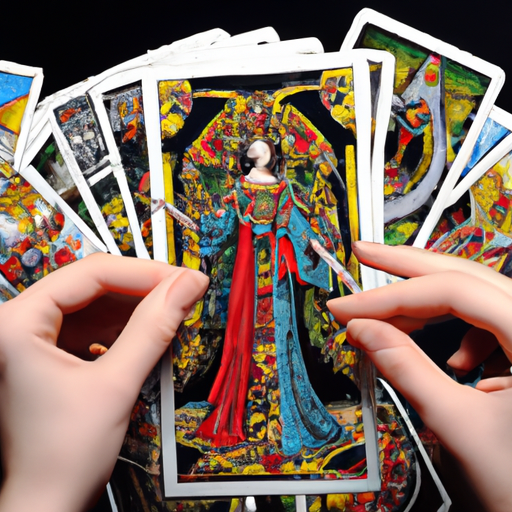
Tarot cards have been a source of fascination for centuries, with their origins dating back to the 15th century. This captivating article delves into the rich history of these mystical cards, exploring their ties to ancient civilizations and shedding light on their evolving interpretations. From their humble beginnings as playing cards to their transformation into instruments of divination and self-discovery, the history of tarot cards is a fascinating journey that continues to captivate and inspire people around the world. Tarot Origins
Early Playing Cards
Tarot, as we know it today, has a rich and fascinating history that dates back centuries. Its origins can be traced back to the early playing cards of the 14th century. Playing cards were first introduced to Europe through the Islamic world, as evidenced by the suits: cups, swords, coins, and polo sticks, which were derived from the Mamluk cards of Egypt. These early playing cards were used primarily for entertainment and simple card games.
Introduction to Tarot
The true origin of tarot as a divinatory tool is a subject of much debate among scholars. Some believe that tarot cards were originally created for playing a game called tarocchi, which became popular in Italy during the 15th century. Others suggest that tarot cards were used for divination even before the tarrocchi game was developed. Regardless of their original purpose, it is clear that tarot cards eventually became associated with fortune-telling and divination.
Italian Tarot Decks
The first known tarot decks were created in Italy during the 15th century. These early Italian tarot decks, such as the Visconti-Sforza and the Sola-Busca, were highly ornate and hand-painted. They consisted of 78 cards, with 22 major arcana cards and 56 minor arcana cards. The major arcana cards depicted powerful archetypal figures, while the minor arcana comprised four suits, each with ten pip cards and four court cards.
Tarot Symbolism and Structure
Major Arcana
The major arcana cards are arguably the most significant and visually striking cards in a tarot deck. These 22 cards represent important life lessons, archetypal energies, and universal themes that we encounter on our spiritual journey. Each card carries a unique symbolism and imagery that conveys deep spiritual and psychological meaning. From “The Fool” to “The World,” the major arcana cards tell a symbolic story of personal and collective transformation.
Minor Arcana
The minor arcana cards make up the bulk of the tarot deck and are divided into four suits: cups, swords, wands, and pentacles (or coins). These suits correspond to the elements of water, air, fire, and earth, respectively. Each suit consists of ten numbered cards (ace through ten) and four court cards (page, knight, queen, and king). The minor arcana cards represent the everyday challenges, experiences, and energies that shape our lives.
Tarot Suit Symbols
The suits in the tarot deck are rich in symbolism and hold deep meanings. Cups are associated with emotions, love, and relationships. Swords represent the realm of the mind, intellect, and communication. Wands symbolize creativity, passion, and inspiration. Pentacles signify the material world, finance, and the physical body. Understanding the symbolism and associations of the tarot suit symbols can provide valuable insights during readings and deepen our connection to the cards.
Numbering and Court Cards
Each numbered card in the minor arcana carries its own unique energy and message. The numerical symbolism provides a framework for interpreting the card’s meaning within the context of a reading. The court cards, on the other hand, represent personality types or specific individuals who may enter our lives. The pages are associated with youth and curiosity, knights embody action and movement, queens symbolize emotional maturity, and kings represent authority and leadership.
Tarot Evolution
The Visconti-Sforza Tarot
The Visconti-Sforza Tarot, created in the 15th century, is one of the earliest surviving tarot decks. This deck, commissioned by the Milanese ruling families, is known for its exquisite artistry and intricate details. The Visconti-Sforza Tarot featured lavish gold leaf accents and stunning illustrations that depicted scenes from mythology, astrology, and medieval life. Its creation marked a significant turning point in the evolution of tarot as both a divinatory and artistic tool.
Printed Decks and Popularization
With the advent of printing technology in the 15th century, tarot cards became more accessible to the general public. Printed decks allowed for mass production and distribution, making tarot more affordable and widespread. As the popularity of tarot grew, new designs and variations began to emerge. The symbolism and artwork of different tarot decks varied, reflecting the cultural and artistic sensibilities of different time periods and regions.
Le Tarot de Marseille
Le Tarot de Marseille is one of the most iconic and influential tarot decks in history. It originated in the 17th century in the French city of Marseille and quickly became the standard deck used for divination throughout Europe. This deck features simplified and stylized illustrations, with bold primary colors and minimalistic imagery. Le Tarot de Marseille set the foundation for many modern tarot decks and established tarot as a powerful tool for self-reflection and spiritual exploration.
Esoteric Interpretations
In the late 18th century and early 19th century, a wave of esotericism swept across Europe, sparking renewed interest in the occult, mysticism, and spiritual practices. Tarot found its place within this esoteric movement, with influential figures like Antoine Court de Gébelin and Eliphas Lévi interpreting the cards through a symbolic and mystical lens. These esoteric interpretations emphasized the tarot cards’ connection to ancient wisdom, astrology, and the Kabbalah, expanding the scope of tarot beyond mere fortune-telling.
Tarot in Divination
Tarot Reading Methods
Tarot reading methods vary, but they generally involve shuffling the cards and laying them out in a specific pattern or spread. The reader then interprets the cards’ meanings based on their placement and the connections between them. Popular tarot spreads include the Celtic Cross, the Three-Card Spread, and the One-Card Daily Guidance. Each spread offers a unique perspective on a question or situation, providing insight, guidance, and potential solutions.
Rise of Tarot Divination
In the 19th century, tarot started gaining recognition as a divinatory tool beyond its use in card games. Interest in esotericism and spirituality surged, leading to an increased fascination with tarot as a means of accessing hidden knowledge and tapping into psychic abilities. Tarot readers emerged as respected professionals and began offering readings to clients seeking guidance and clarity in various aspects of their lives.
19th Century Occult Revival
The 19th century witnessed a revival of occult and mystical traditions, including the practice of tarot reading. Influential figures such as Arthur Edward Waite and Pamela Colman Smith collaborated to create the Rider-Waite-Smith Tarot, which is now one of the most widely used tarot decks in the world. This deck introduced innovative symbolism and imagery, bridging the gap between esoteric knowledge and popular culture. The occult revival of the 19th century laid the foundation for the continued popularity and exploration of tarot in the modern era.
Tarot in Literature and Art
Tarot in Literature
Tarot has served as a source of inspiration for countless works of literature, both as a central theme and as a symbol or metaphor. In literature, tarot cards often represent a journey of self-discovery, the exploration of hidden truths, or acts as a guide for characters facing important decisions. From Hermann Hesse’s “The Glass Bead Game” to Italo Calvino’s “The Castle of Crossed Destinies,” tarot has left a lasting impression on the literary world, captivating readers with its mystique and potential for storytelling.
Tarot in Visual Arts
The imagery and symbolism of tarot have also found their way into various forms of visual art. Artists throughout history have been drawn to the expressive and evocative nature of tarot cards, incorporating them into paintings, sculptures, and mixed-media artwork. The vibrant colors, archetypal figures, and intricate details of the tarot have provided artists with a rich visual language through which they can explore themes of spirituality, mysticism, and the human condition.
Modern Tarot Imagery
In recent years, there has been a proliferation of modern tarot decks that push the boundaries of traditional imagery and offer unique interpretations. Artists and illustrators have embraced diverse styles and themes, creating tarot decks that cater to a wide range of interests and preferences. From whimsical and fantastical decks to minimalist and abstract designs, the modern tarot landscape reflects the ever-evolving nature of art and the human imagination.
Tarot in Pop Culture
Tarot in Film and Television
Tarot has made appearances in various films and television shows, often adding an element of mystery, intrigue, and symbolism to the narrative. From David Lynch’s “Twin Peaks” to Guillermo del Toro’s “Pan’s Labyrinth,” the use of tarot cards in visual media enhances the storytelling and heightens the sense of the unknown. Whether used as a plot device or as a means of character development, tarot in film and television continues to captivate audiences and spark curiosity.
Tarot in Music
Music has also been influenced by the imagery and symbolism of tarot. Many musicians and bands have used tarot cards as album artwork, song titles, or lyrical inspiration. The evocative nature of tarot allows musicians to convey complex emotions and concepts through their music, creating a deeper connection with their audience. Tarot imagery in music adds an extra layer of depth and meaning, inviting listeners to embark on a journey of self-reflection and exploration.
Tarot in Fashion
The allure and aesthetics of tarot have permeated the fashion industry, inspiring designers and fashion enthusiasts alike. Tarot-inspired clothing, accessories, and runway shows have become increasingly popular, blending symbolism, mysticism, and personal style. Tarot motifs, such as the moon, the sun, and the star, have become fashionable symbols that reflect a sense of spirituality and individuality. Tarot in fashion represents a blending of ancient wisdom and contemporary expression, inviting individuals to embrace their unique identity.
Tarot Controversies
Religious Opposition
Throughout history, tarot has faced opposition from certain religious groups who view it as a form of divination or fortune-telling that goes against their beliefs. Some religious institutions consider tarot to be associated with the occult or even demonic practices. However, it is important to note that tarot is a tool that can be interpreted in various ways, and many practitioners see it as a means of self-reflection, personal growth, and spiritual exploration.
Scientific Skepticism
From a scientific perspective, tarot is often met with skepticism due to its lack of empirical evidence and predictive accuracy. Critics argue that tarot relies on subjective interpretation and vague generalizations, making it no more accurate than chance. However, proponents of tarot argue that its value lies not in its ability to predict the future, but in its capacity to provide guidance, insight, and a fresh perspective on one’s life circumstances.
Tarot and Occultism
Due to its association with esoteric practices, tarot has been connected with various occult movements throughout history. This has led to misconceptions and misunderstandings about tarot’s true nature and purpose. While the occult and tarot share some common ground, it is essential to recognize that tarot has evolved beyond occultism and has become a tool for personal reflection, spiritual exploration, and self-discovery for individuals from all walks of life.
Modern Tarot Practices
Tarot Deck Designs
In recent years, there has been an explosion of tarot deck designs, featuring a wide range of artistic styles, themes, and interpretations. Artists and creators have taken the traditional tarot symbolism and infused it with their unique perspectives, resulting in innovative and visually stunning decks. These diverse designs cater to various interests and aesthetics, allowing readers to choose a deck that resonates with them on a personal level.
Tarot Reading Methods
Tarot reading methods have evolved alongside the changing cultural landscape. While traditional spreads such as the Celtic Cross or the Three-Card Spread are still widely used, modern readers have also developed their own unique spreads and approaches. Some readers may incorporate other divinatory tools or techniques alongside tarot, such as astrology or numerology. The combination of different modalities adds depth and nuance to a tarot reading, allowing for a more comprehensive and personalized experience.
Tarot as a Tool for Self-Reflection
One of the fundamental purposes of tarot is to provide individuals with a means of self-reflection and introspection. Tarot readings can offer fresh perspectives on personal challenges, illuminate hidden aspects of one’s psyche, and encourage personal growth and transformation. By engaging with the symbolism and archetypes of the cards, individuals can gain insight into their emotions, thoughts, and behaviors, empowering them to make more conscious choices and embrace their true potential.
Tarot Communities
With the rise of the internet, tarot has become a global phenomenon, connecting individuals from all over the world through online communities, forums, and social media groups. These virtual spaces provide a platform for tarot enthusiasts to share their knowledge, experiences, and insights, forming a supportive network of like-minded individuals. Tarot communities also offer opportunities for learning, collaboration, and mentorship, ensuring that the tradition and practice of tarot continue to evolve and flourish.
Tarot and Psychology
Carl Jung and Tarot
Renowned psychologist Carl Jung had a deep fascination with tarot and saw it as a powerful tool for psychological exploration. He believed that the archetypal imagery and symbolism of the tarot resonated with the collective unconscious, tapping into universal patterns of human experience. Jung saw tarot as a means of accessing deep layers of the psyche and gaining insight into one’s unconscious motivations, desires, and fears. His work paved the way for the integration of tarot into the field of psychology.
Tarot as a Therapeutic Tool
Tarot is increasingly being used in therapeutic settings as a tool to facilitate self-awareness, healing, and personal growth. Tarot readings can serve as a catalyst for introspection, helping individuals uncover and process unresolved emotions, past traumas, or limiting beliefs. By weaving together psychology, symbolism, and intuition, tarot therapists guide clients through the exploration of their inner landscape, fostering a deeper understanding of oneself and offering possibilities for positive change.
Psychological Symbolism
Tarot’s rich symbolism and archetypal imagery align closely with the principles of psychology. Each tarot card represents a universal psychological theme or aspect of the human experience. For example, “The Fool” symbolizes new beginnings, spontaneity, and the journey of self-discovery, while “The Lovers” represents choices, partnerships, and relationships. By working with tarot, individuals can tap into these archetypes and use them as a mirror to gain insight into their own psyche and navigate life’s challenges.
Tarot and Spirituality
Tarot and Paganism
Tarot and paganism share a symbiotic relationship, with many pagans incorporating tarot into their spiritual practices. The symbolism and imagery of tarot align closely with pagan principles, such as the cycles of nature, the elements, and the divine feminine. Tarot cards can be used as gateways to connect with deities, access spiritual guidance, and deepen one’s connection with the natural world. Tarot and paganism together provide a framework for personal growth, ritual, and the exploration of mystical experiences.
Tarot and New Age Spirituality
Tarot has become increasingly popular within the broader context of New Age spirituality. New Age practices emphasize personal growth, holistic healing, and the fusion of ancient wisdom with modern perspectives. Tarot fits naturally within this framework, offering seekers a means of self-discovery, divination, and connection with higher consciousness. The combination of tarot with other New Age practices, such as crystal work, meditation, and affirmations, empowers individuals to explore their spirituality and seek answers to life’s deeper questions.
Personal Growth and Enlightenment
At its core, tarot is a tool for personal growth and enlightenment. By engaging with the archetype, symbolism, and intuitive wisdom of the cards, individuals can embark on a journey of self-discovery, self-reflection, and self-realization. Tarot readings can provide clarity, affirmation, and guidance, assisting individuals in making empowered choices and embracing their true potential. Tarot is a path of transformation and self-awareness, offering a gateway to personal growth and the exploration of the human psyche.
In conclusion, the history of tarot cards is a captivating tale that spans centuries and cultures. From early playing cards to the intricate symbolism of Italian tarot decks, tarot has evolved into a powerful tool for divination, self-reflection, and spiritual exploration. Despite controversies and skepticism, tarot has persisted and thrived, finding its place in literature, art, pop culture, and the personal practices of individuals around the world. Whether used as a means of guidance, a form of therapy, or a tool for personal growth, tarot continues to inspire and engage, unlocking the mysteries of the human experience.

This image is property of images.unsplash.com.